How regional data center placements shape session timeout protocols and feature access windows in cross-licensed digital card platforms
How regional data center placements shape session timeout protocols and feature access windows in cross-licensed digital card platforms
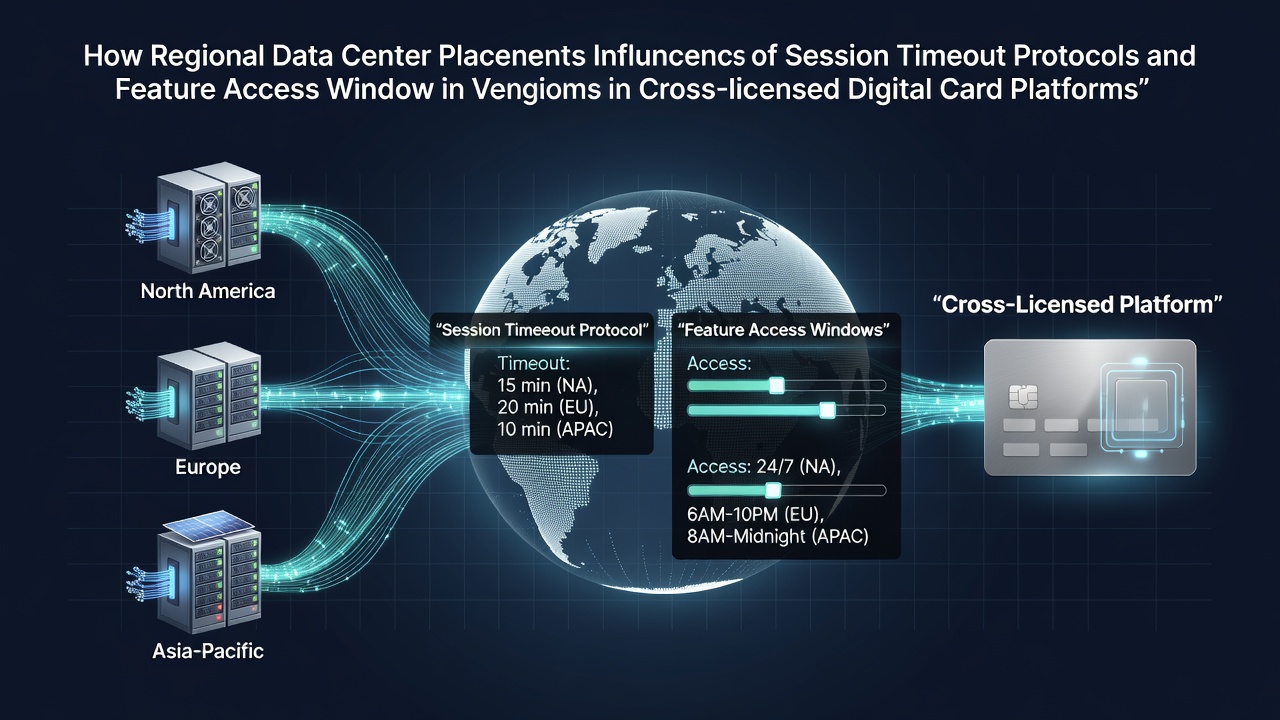
Regional data center placements determine how quickly digital card platforms process user interactions and enforce compliance rules in multiple licensing environments, since physical distance from servers affects both response times and regulatory alignment. Operators maintain separate facilities in North America, Europe, and Asia-Pacific zones to handle traffic from cross-licensed users who access the same account across borders. These configurations directly influence session timeout protocols that log users out after periods of inactivity and feature access windows that restrict certain game modes or betting options based on location signals.
Data Center Locations and Latency Patterns
Facilities positioned near major population centers reduce round-trip times for authentication requests and game state updates, which allows platforms to calibrate timeout thresholds more precisely. When servers sit hundreds of miles from end users, even small delays accumulate during card draws or multi-player table synchronizations, prompting systems to extend idle periods before automatic logout occurs. Data from industry monitoring services shows that platforms using distributed nodes maintain average latencies under 50 milliseconds in primary markets, whereas centralized setups often exceed 120 milliseconds and require broader timeout buffers to prevent premature disconnections.
Cross-licensed operators therefore map user IP ranges to the nearest available data center cluster before initiating a session. This routing decision sets the baseline for how long the platform waits for activity signals before enforcing a timeout, and it also dictates which feature sets become available during that window. Platforms licensed in both New Jersey and Ontario, for example, route North American traffic through East Coast facilities while directing European sessions to Frankfurt or Amsterdam nodes, creating distinct timeout and access rules for each cohort.
Session Timeout Protocol Adjustments
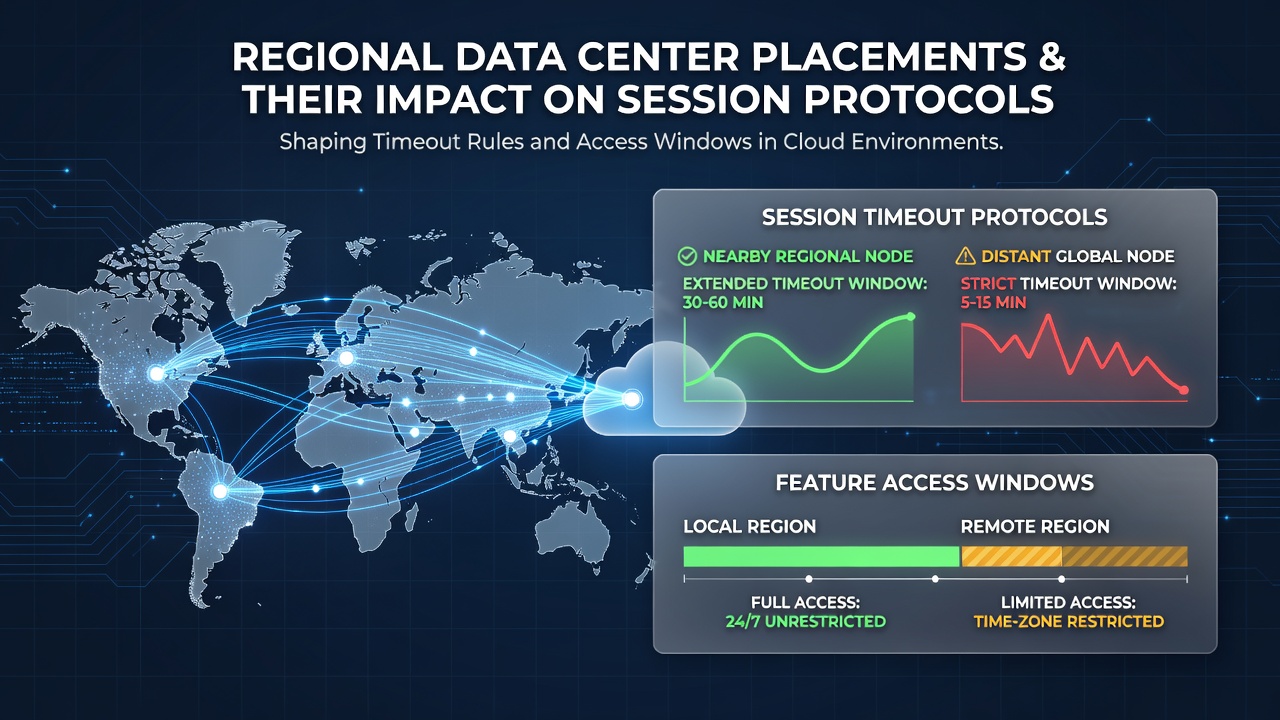
Timeout protocols adapt to regional infrastructure because regulators in different jurisdictions require varying levels of continuous connection verification. In markets with strict anti-money-laundering rules, shorter timeouts trigger more frequent re-authentication checks that rely on low-latency connections to avoid user friction. Platforms respond by shortening idle periods when users connect through nearby data centers and lengthening them when traffic routes through distant facilities that introduce measurable delay.
June 2026 marks the scheduled rollout of updated connection standards in several Asia-Pacific licensing zones, which will require operators to demonstrate sub-80-millisecond response times for all active sessions. Companies have already begun shifting additional capacity to Singapore and Tokyo facilities to meet those benchmarks without altering core timeout logic for users in other regions.
Feature Access Windows and Regional Compliance
Feature access windows operate as time-bound permissions that open or close based on both user location and the data center handling the connection. Progressive jackpot tables or side-bet options often carry geographic restrictions tied to local gaming statutes, and the platform checks the active data center assignment before granting entry. When a user crosses into a new licensing territory mid-session, the system may hand off the connection to another cluster, instantly recalculating available features and resetting any active timers.
Observers note that this handoff process succeeds only when data centers maintain synchronized user profiles through low-latency links between regions. Delays in profile replication can cause temporary feature lockouts even when the user remains within permitted boundaries. Research conducted by the Australian Communications and Media Authority indicates that platforms employing edge caching at multiple sites reduce such interruptions by 40 percent compared with single-region deployments.
Cross-Licensing Implications
Cross-licensed digital card platforms must satisfy simultaneous requirements from multiple regulatory bodies, each of which may specify different standards for session continuity and data residency. A platform holding licenses in Nevada and Malta routes traffic through separate North American and European clusters while maintaining a unified account ledger. The choice of primary data center for each session therefore determines which set of timeout and access rules takes precedence during that interaction.
Additional facilities planned for 2026 in secondary markets will allow operators to localize more traffic and reduce reliance on transcontinental routing. This expansion supports finer control over session parameters without requiring changes to the underlying game engines.
Technical Synchronization Across Clusters
Operators synchronize session state across regional clusters using dedicated high-speed links that carry encrypted updates every few seconds. These links ensure that a timeout triggered in one data center registers instantly in others, preventing users from maintaining parallel sessions that violate licensing terms. Feature access windows also depend on this synchronization, since certain promotions activate only when teh platform confirms both the user's location and the regulatory status of the handling cluster.
Studies from the Centre for International Governance Innovation document how latency differences between clusters influence the frequency of state reconciliation calls. Platforms that place reconciliation servers in central network hubs report fewer conflicts during cross-region handoffs, allowing tighter timeout windows without increasing disconnection rates.
Conclusion
Regional data center placements establish the physical foundation for session timeout protocols and feature access windows in cross-licensed digital card platforms. By positioning infrastructure strategically, operators align technical performance with diverse regulatory demands while maintaining consistent user experiences across jurisdictions. Continued expansion of these networks through 2026 will further refine how platforms manage latency, compliance checks, and real-time access controls in an increasingly distributed licensing environment.