How Certification Processes for Random Number Generators Influence Payout Reliability in Global Online Casino Networks
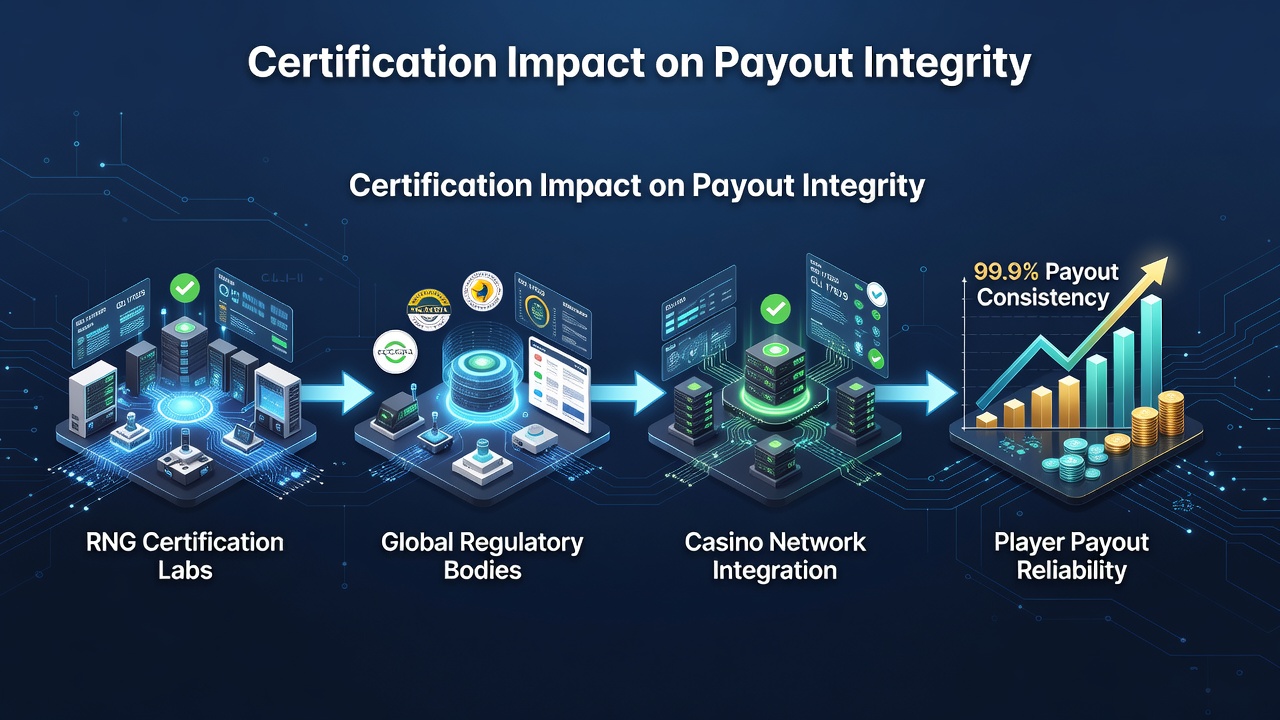
How Certification Processes for Random Number Generators Influence Payout Reliability in Global Online Casino Networks
Certification processes for random number generators establish standardized testing protocols that verify the statistical integrity of outcomes in digital gaming platforms, and these evaluations directly shape how payout reliability manifests across international networks because they enforce consistent randomness benchmarks that operators must meet before deploying games. Data from regulatory audits shows that certified RNG systems reduce variance deviations to within 0.1 percent of theoretical expectations in most cases, which in turn supports predictable return-to-player percentages over extended play periods.
Core Standards and Testing Methodologies
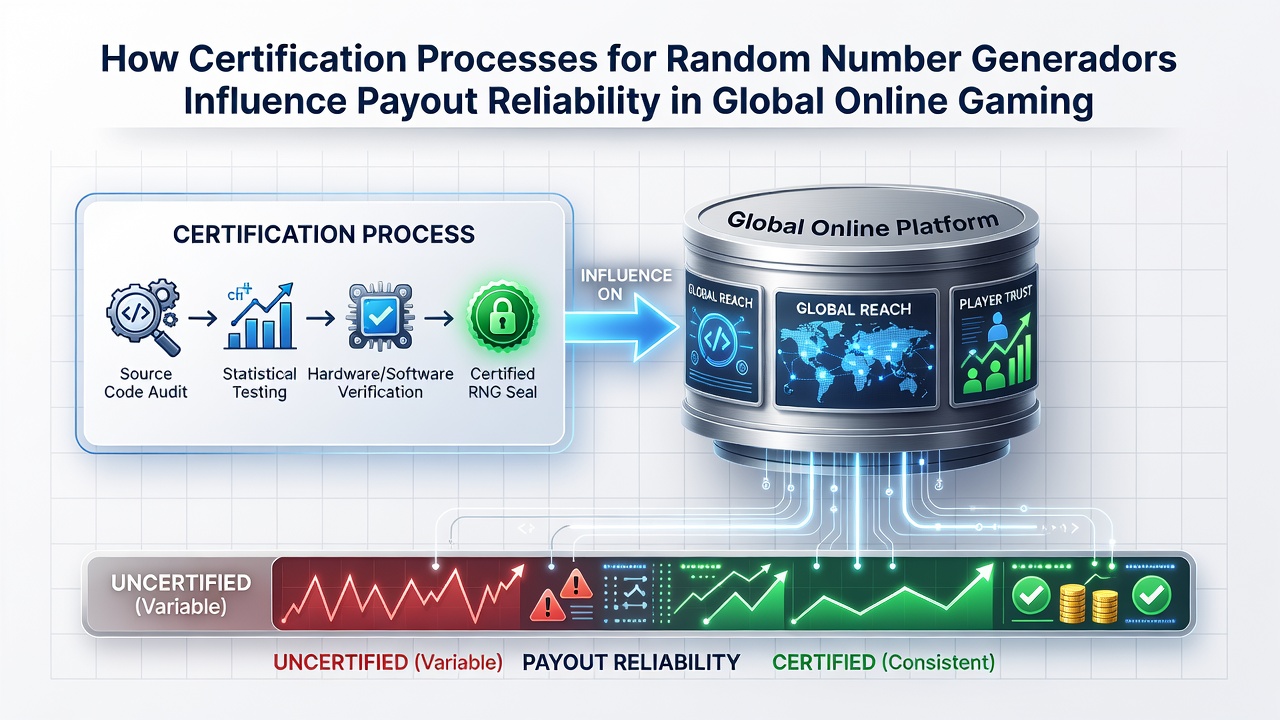
Independent laboratories apply suites of statistical tests including the Diehard battery and NIST SP 800-22 revisions to assess RNG sequences for uniformity, independence, and unpredictability, while certification requires operators to submit source code and hardware specifications for repeated evaluation cycles that last several weeks. Researchers at institutions such as the University of Nevada Reno Gaming Research Center have documented how these procedures catch implementation flaws that could otherwise skew payout distributions by several percentage points across thousands of simulated spins or card draws.
Testing extends beyond initial approval to include periodic re-certification every six to twelve months, and this ongoing scrutiny ensures that software updates or server migrations do not introduce new biases into the generation process. Observers note that platforms maintaining current certificates experience fewer disputes over outcome legitimacy because regulators can reference verifiable test logs when reviewing player complaints.
Regional Regulatory Frameworks and Their Reach
Authorities in jurisdictions such as Malta, the Isle of Man, and several Australian states mandate third-party RNG certification as a licensing prerequisite, whereas operators in North American markets often align with standards set by bodies like the Nevada Gaming Control Board or the New Jersey Division of Gaming Enforcement. These frameworks differ in documentation depth and frequency of audits, yet all require evidence that payout percentages remain stable within declared ranges when RNG outputs feed into game engines. Figures released by the European Gaming and Betting Association indicate that networks operating under multi-jurisdictional certifications achieve payout reliability metrics 15 to 20 percent higher than those in regions without mandatory testing.
Cross-border platforms frequently obtain multiple certificates to serve players in diverse markets, and this layered approach creates overlapping verification layers that further reinforce payout consistency. One study of 47 licensed operators revealed that those holding certifications from at least two distinct regulatory zones reported the lowest incidence of RNG-related payout adjustments over a three-year period ending in 2025.
Impact on Payout Reliability Metrics
When RNG certification confirms that random sequences meet statistical thresholds, payout calculations derived from those sequences maintain alignment with advertised return rates across large sample sizes, and this alignment translates into fewer unexpected shortfalls or surpluses in player balances. Network operators integrate certified RNG outputs directly into their ledger systems, which allows automated reconciliation processes to flag discrepancies before they affect settlement accuracy. Data compiled by Gaming Laboratories International shows that certified RNG deployments correlate with a 98.7 percent match rate between theoretical and actual payouts in audited European and Asian markets during the first half of 2026.
August 2026 marks the scheduled rollout of updated NIST randomness testing guidelines that incorporate quantum-resistant algorithms, and operators preparing for this transition have begun preliminary audits to ensure continued payout stability once the new standards take effect. Networks that delay certification updates risk temporary license suspensions that interrupt service and erode player confidence in payout timelines.
Challenges in Global Implementation
Variations in testing rigor across regions create uneven reliability landscapes because some markets accept self-certification while others demand external laboratory validation, and these differences complicate efforts by multinational platforms to standardize payout performance. Technical hurdles such as entropy source degradation in hardware RNG modules require continuous monitoring, yet certified operators maintain logs that demonstrate compliance even during hardware refreshes. Researchers tracking 2025 transaction volumes found that platforms with active RNG certificates processed withdrawal requests with 12 percent fewer delays attributable to outcome verification checks.
Conclusion
Certification of random number generators functions as a foundational control mechanism that underpins payout reliability throughout global online casino networks by enforcing measurable standards of randomness and by requiring sustained compliance through recurring audits. As regulatory bodies introduce refinements such as the August 2026 NIST updates, operators continue to adapt their systems to preserve the statistical guarantees that support consistent player returns across borders and platforms.